



At the clinic
Johar Town, Lahore
Rehabilitation programme
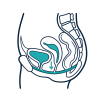
Rehabilitation after birth, covering the abdominal wall, the pelvic floor and returning to the activity you want to get back to.
Whether this programme is the right one, and what it should contain, is decided by assessment — not by this page.
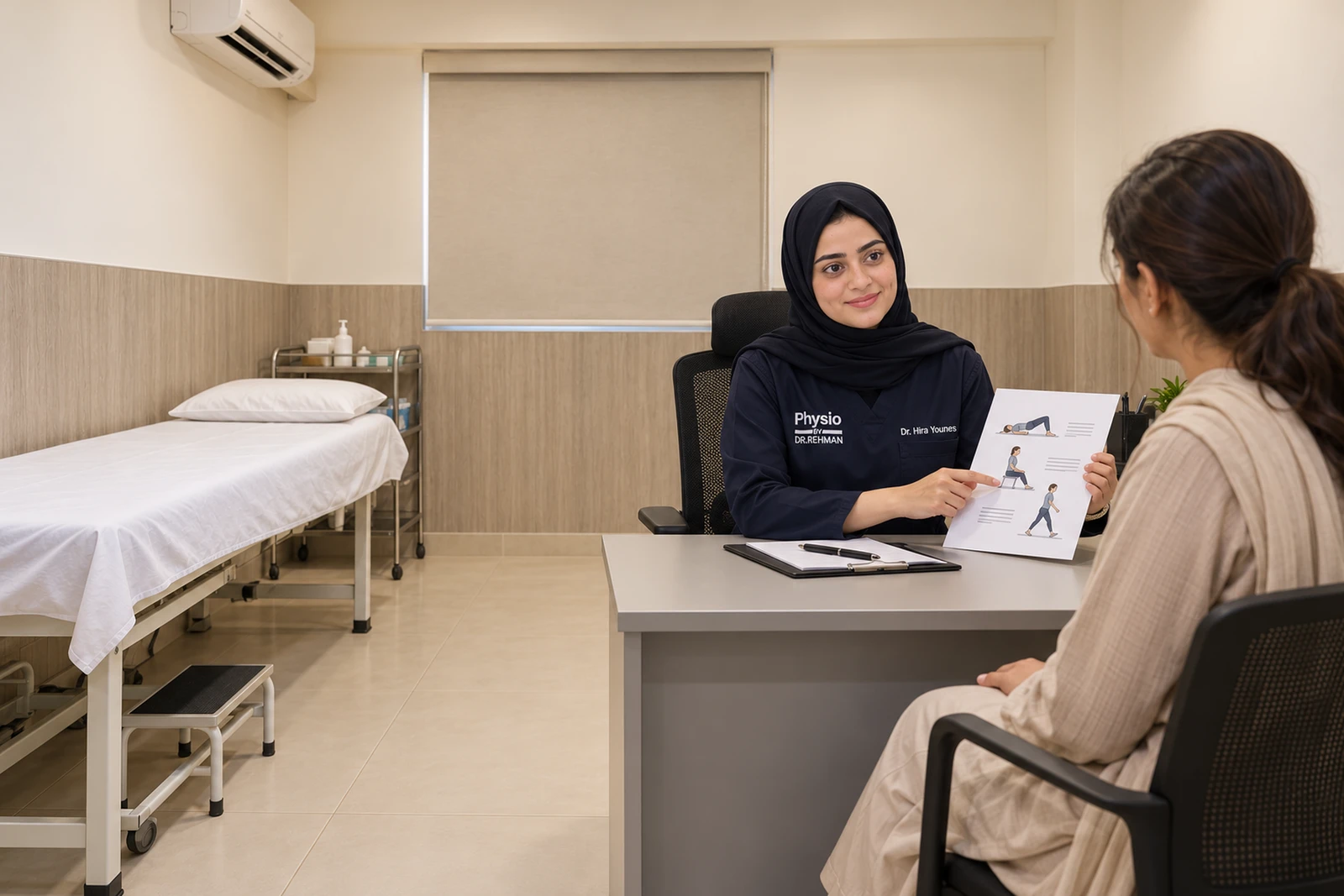
Common after birth, and a reason for assessment rather than waiting.
A graded plan rather than a guess about when it is safe to start.
Bladder, abdominal separation or pelvic symptoms you would rather have assessed.
Symptoms guide progression. Leaking, heaviness or pain during an activity is a signal to adjust the load, not to push through it.
This does not replace postnatal medical care. Heavy bleeding, fever, severe pain, or difficulty passing urine need medical assessment first.
Each of these has its own page explaining assessment and care. This programme gives them context — it does not replace them.
The process
How the birth went, what symptoms you have, and what activity you want to return to. Any physical assessment is explained first and needs your consent.
Priorities agreed with you — often bladder or pressure symptoms first, then return to activity.
Pelvic floor and abdominal wall work alongside general strength, progressed as symptoms allow.
Reassessed as you return to more demanding activity, particularly running and lifting.
Treatments are the individual techniques a physiotherapist may use within this programme. None of them is decided before you have been assessed.
This programme is not built around the individual techniques listed elsewhere on this site. It is built around assessment, graded progression and practising the movements that matter to you — set out inhow the programme runs above. If a technique is useful along the way, it is decided at the assessment.
Johar Town, Lahore
Treatment at your home in Lahore
Guided sessions remotely
Ask the practice which setting is suitable for your programme and recovery stage. Home visits and online guidance depend on assessment and availability; they do not replace any required in-person care.
Patient experience
Consented patient story pending
Layout preview · Video not yet availableConsented patient story pending
Layout preview · Video not yet availableConsented patient story pending
Layout preview · Video not yet availableOften once you feel able to travel and any complications are medically stable — caesarean or tears may need extra clearance.
Some abdominal separation is normal; assessment looks at function and load control rather than gap width alone.
Yes with technique coaching — programmes aim for real tasks, not abstract exercises only.
Message the practice on WhatsApp with a short description of your problem. The coordinator will reply during clinic hours to arrange a time.
Booking is with the practice rather than an individual. After you describe the problem, the practice assigns the physiotherapist whose clinical focus fits it. You can read about the team on the physiotherapists page.
When you can begin, how long it is likely to take, and what is safe between sessions all depend on your operation or diagnosis and on what your medical team has advised. Ask and you will get an answer about you rather than a general one.
Describe your situation on WhatsApp. The assessment decides what the programme should actually contain.